
Relative Humidity (ρ)
air-Qs with a sensor for Relative Humidity
Definition
Humidity describes the water vapor content of the air and is measured absolutely in g/m³ and relatively in %. Water vapor should not be confused with the clouds of steam rising from a pot of boiling water, tempting as that association may be. Water vapor is water in gaseous form and, like every other component of air, invisible.
Relative humidity describes the ratio between absolute and maximum humidity. In other words, it describes the ratio of water vapor actually contained in the air to the maximum possible water vapor content, expressed as a percentage.
In general, a distinction is made between absolute, relative, and maximum humidity. Absolute humidity is defined as the mass of water vapor contained in a defined volume of air. Maximum humidity refers to the highest possible absolute humidity at a given temperature.
The lower the temperature of the air, the less water vapor it can hold. As the air cools, it can therefore happen that the maximum humidity is exceeded if the previously warmer air already had a high relative humidity. Water then condenses on walls, floors, and ceilings.
Limit Values for Relative Humidity:
No legal limit values have been set for either workplaces or residential rooms. In enclosed spaces, a relative humidity between 40 and 60 % is recommended. A range between 30 and 70 % relative humidity is considered acceptable. If relative humidity exceeds 95 % or falls below 23 %, most people perceive the air as uncomfortable.
The threshold for mold growth in rooms is exceeded at 60 % humidity. One caveat applies: when the exterior walls are significantly colder than the indoor air, which occurs especially during the cold half of the year.
Designation | Relative humidity limit values |
General recommendation minimum value | 40 % |
General recommendation maximum value | 60 % |
Effects of Excessively High or Low Humidity:
If the humidity in a room is too low, respiratory performance is reduced. Dryness can also cause skin irritation. The mucous membranes can dry out as well, significantly raising the risk of infection from flu and colds. In extreme cases, this can lead to a higher incidence of nosebleeds.
If relative humidity is too high, sweating as a means of regulating body temperature is impeded, which impairs well-being and thus performance. The circulatory system is also strained in rooms perceived as muggy.
On top of this, high humidity creates a risk of mold growth indoors. Most mold species prefer a relative humidity of 80 % at a temperature of 20 °C, although some species can develop even at lower humidity. When inhaled, the spores and VOC gases released by mold can cause allergies as well as various other complaints. These include migraines, asthma, coughing and colds, conjunctivitis, skin changes, joint pain, and gastrointestinal issues.
In addition, humidity levels above 60 % lead to increased proliferation of dust mites. As their population grows, they release more allergens, which is especially burdensome for allergy sufferers.
Formation:
Water vapor is formed by the evaporation of individual water molecules, which detach from the water surface with the help of thermal energy and pass into the air. This process depends heavily on the temperature of the water and the air. Other important factors include the size of the water surface and the saturation level of the air.
Indoors, humidity is generated by the breathing and sweating of the people and animals present. Cooking, showering or bathing, and drying laundry also contribute to increased humidity. In addition, water can penetrate through leaky windows, roofs, and walls and later evaporate into water vapor. Consistent insulation, frequent ventilation, and strong heating reduce the relative humidity of a room.
Elevated humidity over extended periods is a clear indicator of water damage from heating or drinking water pipes inside interior walls.
Sensor Used:
Relative humidity is measured in the air-Q by a highly accurate sensor. Because of the air-Q's self-heating, the temperature inside the device differs from the temperature outside. This self-heating also affects the relative humidity measured inside the housing and is corrected for the exterior of the housing using mathematical formulas. Nevertheless, the air-Q responds somewhat more sluggishly to changes in humidity than an exposed sensor would.
Measuring Relative Humidity:
The air-Q air analyzer can also measure and analyze relative humidity, as well as other pollutants, using one of its sensors. You can also find many facts about the air-Q here. You can order the air quality measuring device in our online store.
Articles about Relative Humidity

Humidity in Spring: Why It Still Matters
Especially in spring, humidity often rises unnoticed, which can promote mold formation. This can become a problem especially in the bedroom, living room, and basement. Devices like the air-Q help make relevant values visible and create an ideal indoor climate.
Learn more
Humidity in Your Home: Everything You Need to Know
Find out how to optimally regulate humidity in your home. Discover tips for achieving the ideal indoor humidity and measures to improve humidity in your living space. Get valuable advice on lowering and raising moisture levels for a healthy living climate.
Learn more
Absolute Humidity: Definition, Causes & Effects
Absolute humidity describes how much water vapor is present in the air. This measurement is influenced by our breathing, plants, cooking, or showering. Since absolute humidity plays an important role in human well-being, we take a closer look at this metric.
Learn more
Minimum Humidity 40 Percent: Establishing Healthy Humidity Levels
Dry air is a particular problem during the winter heating season: on one hand, too-low room humidity worsens the important sense of comfort. On the other hand, it leads to an increased risk of infection – for example from flu viruses. That's why a trade association launched the Minimum Humidity 40 Percent campaign.
Learn more
Natural Dehumidifiers: How to Improve Your Indoor Climate Without Any Chemicals
Excess humidity can cause mold and poor air quality. Natural dehumidifiers like salt, activated carbon, or plants offer simple solutions. With the air-Q, you measure humidity in real time and see which measures actually improve your indoor climate.
Learn more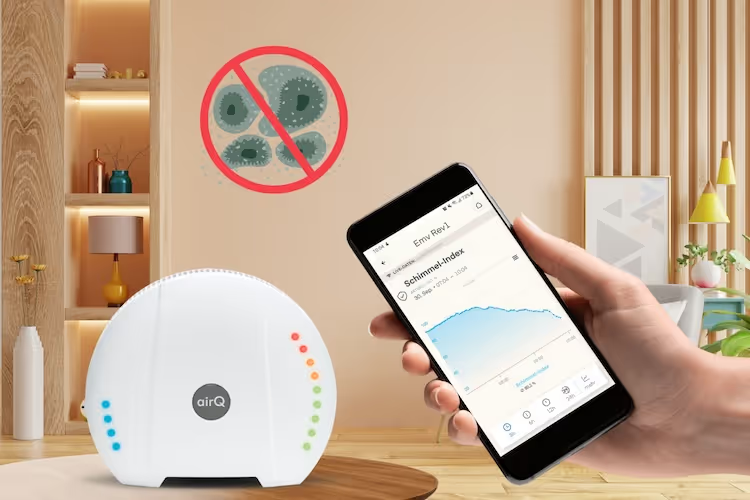
Mold & Smart Homes: How Modern Technology Can Monitor Air Quality
Mold in a home is a widespread problem that isn't just unpleasant, but also carries health risks. In this blog post, we want to show you how modern smart home technology like air-Q can help monitor air quality in your rooms and detect mold growth early.
Learn moreCalculators
More measured values / sensors