

Oxygen (O₂)
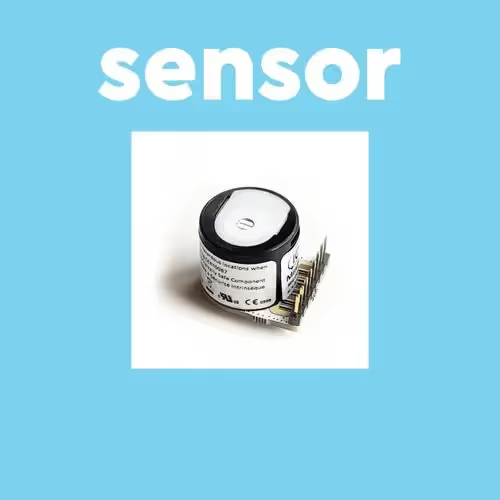
air-Qs with a sensor for Oxygen

Description:
Almost all animal life needs oxygen to live. It is absorbed through breathing or, when dissolved in water, through absorption. At high concentrations, however, oxygen is toxic to most living organisms.
All combustion processes, as well as corrosion processes, take place with the involvement of O₂.
In addition to its medical use, it is of great importance especially to the metalworking industry, since oxygen can form compounds with almost all elements. Oxygen is also involved in many combustion and corrosion processes.
Limit Values for Oxygen:
There are no legally established limit values in Germany. Possible harm from oxygen depends primarily on pressure. DGUV Rule 113-004 for workplace safety specifies a value of 17% oxygen.
The air exhaled by a person still contains approximately 16 % oxygen. The oxygen concentration of the air previously inhaled averages around 21 %.
Even an oxygen concentration of 100 %, such as is required, for example, when ventilating patients, can lead to brain damage over the medium term.
Designation | Oxygen limit values |
DGUV Rule 113-004 for work in silos and confined spaces | 17 % |
Effects of Excessively High or Low O₂ Concentrations:
An undersupply affects the organism. If the oxygen content of the air drops below 17 %, the first signs of fatigue appear. In addition, the error rate in visual tasks and logical reasoning increases. A prolonged reaction time can also be expected.
A significantly reduced oxygen content in the air also leads to symptoms of acute altitude sickness. These include headaches, fatigue, and loss of appetite, as well as nausea and dizziness. In severe cases, cerebral and pulmonary edema can form. At oxygen concentrations below 13 %, severe, irreversible damage can occur, which can be fatal — suffocation results.
The risk of oxygen poisoning exists only when O₂ is present at a partial pressure significantly exceeding normal atmospheric pressure. This is especially relevant for divers. Symptoms, besides rapid and shallow breathing, include phenomena such as visual flickering, muscle twitching, and auditory hallucinations. Nausea and dizziness can also occur, up to unconsciousness and epilepsy-like seizures.
In chronic lung diseases with elevated CO₂ partial pressure, such as COPD, ventilating patients with oxygen can have serious consequences. The suddenly increased supply of O₂ can, under certain circumstances, lead to respiratory arrest.
Formation of O₂:
The Earth's crust alone consists of 48.9 % oxygen. In the Earth's outer layers, the proportion is around 30 %. On Earth as a whole, only iron occurs in even greater abundance. However, this oxygen is chemically bound, not present as a breathable gas. In the primordial era, cyanobacteria released oxygen as a waste product of their photosynthesis into the atmosphere over a period of more than a billion years, thereby generating the free oxygen that forms the basis for much of life today.
Plants release oxygen during photosynthesis. This is a biochemical reaction driven by sunlight, in which the plant replenishes its own energy stores from CO₂ and water, releasing the oxygen it does not need in the process.
Sensor Used:
Oxygen is measured using a sensor based on optical fluorescence. The advantage of this principle is its long lifespan compared to an electrochemical sensor, and lower cost. There are no disadvantages. The sensor we use has no known cross-sensitivities to other gases.
Measuring Oxygen:
With the air-Q measuring device, you can measure oxygen, but also all other relevant components of indoor air, such as carbon monoxide, for example. As a particularly powerful and comprehensive device, the air-Q air analyzer has sensor technology that can measure the O₂ content of indoor air.
More information about the technology can be found here. You can order the air-Q in our online store.
Articles about Oxygen

Oxygen (O₂): Definition, Formation & Consequences
What exactly is oxygen, and why is this diatomic gas so important to us? Can you breathe in too much oxygen? And what helps against too little oxygen in the blood? We took a closer look at this reading and answer important questions about the chemical element.
Learn more
Carbon Monoxide Risk From Pellet Storage?
Heating with pellets is modern and a good alternative to oil. But be careful: the wood pellets can produce an odorless, non-irritating, and thus undetectable, yet deadly gas — carbon monoxide. Anyone who inhales too much of it risks fatal poisoning. Our article shows how to still heat safely with pellets.
Learn more
Poisoning Risk: Three Carbon Monoxide Sources Especially in Summer
Carbon monoxide is a highly toxic gas produced, for example, during combustion processes like in stoves and fireplaces. However, there are also carbon monoxide sources in summer that can become dangerous and pose a risk to people indoors.
Learn more
Carbon Monoxide Poisoning: How Can I Minimize the Risk?
Carbon monoxide is a tricky gas because it's colorless and odorless. The trend toward wood stoves and heavily insulated homes increases the risk of carbon monoxide poisoning. This article covers causes, symptoms, and treatment — and introduces the air-Q CO detector and air analyzer.
Learn more
Heating Safely With a Gas Heater & Gas Boiler
Gas heaters unfortunately keep causing devastating gas accidents with significant property damage and even injuries. Under certain conditions, the gas ignites and causes an explosion. In fall 2024 alone, explosions in Memmingen and Bochum claimed victims. We explain how a gas explosion happens and how you can prevent one.
Learn more
Ozone: What It Is, How It Forms, and Why We Should Understand It
Ozone explained simply: formation, effect on the air and health. Learn how ground-level ozone forms and how the air-Q helps monitor and improve indoor air quality.
Learn moreCalculators
More measured values / sensors