
Our blog covers indoor air and air quality
Our blog is a guide, a reference, and an information source all in one. Here you’ll find well-grounded knowledge, practical tips and current studies about air quality and a healthy indoor climate.

Ozone: What It Is, How It Forms, and Why We Should Understand It
Ozone explained simply: formation, effect on the air and health. Learn how ground-level ozone forms and how the air-Q helps monitor and improve indoor air quality.
Learn more
Musty Smell in Your Home Without Visible Mold? – Here's What You Should Do Now!
Does your home smell musty, fungal, or earthy, but you can't see any mold? A hidden mold infestation could still be the cause of the smell. We answer the most important questions about possible mold growth indoors and give tips on how to prevent a mold outbreak.
Learn more
Oxygen (O₂): Definition, Formation & Consequences
What exactly is oxygen, and why is this diatomic gas so important to us? Can you breathe in too much oxygen? And what helps against too little oxygen in the blood? We took a closer look at this reading and answer important questions about the chemical element.
Learn more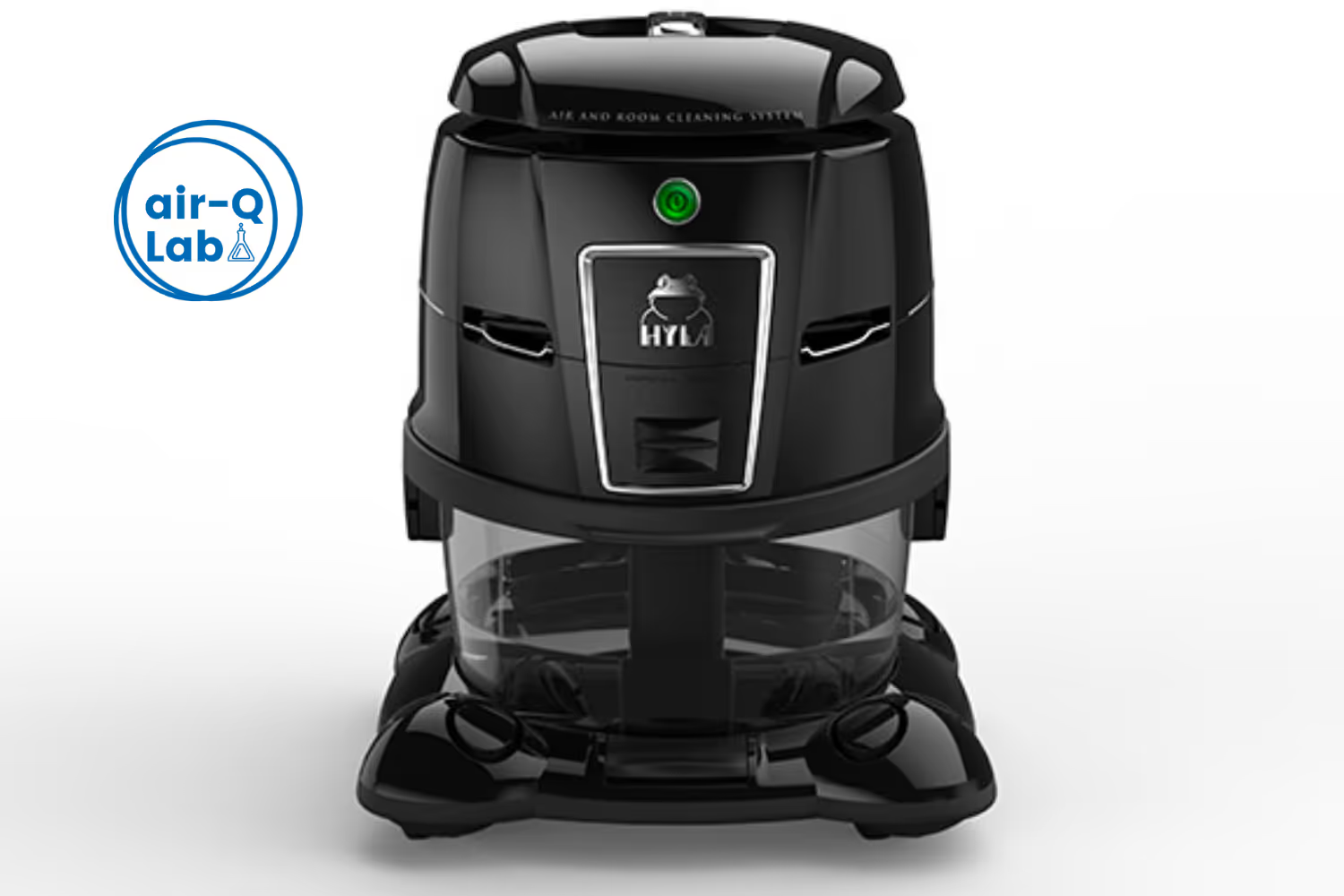
Can the HYLA Water Vacuum Purify the Air? The air-Q Lab Test
Fresh air is healthy and contains a perfect level of humidity. You should supply your lungs with good air not just outdoors, but indoors too. Especially in winter, room air is dry and rather poor quality. Air purifiers are meant to counteract this. In our air-Q Lab, we tested the HYLA EST water vacuum.
Learn more
Measuring Temperature: What Distinguishes Room Temperature From Air Temperature
The temperature level in rooms is often simply referred to as temperature. In recommendations for optimal temperatures, for example, it therefore remains vague whether air temperature or the far more meaningful room temperature is meant. Technical devices for monitoring room air are still mostly one-sidedly focused on air temperature today.
Learn more
Household Dust: How Do Dust Bunnies Form and How Do We Protect Our Health?
Household dust, a mix of various organic and inorganic particles, can seriously harm our health. Causes can be natural or human-made. This blog article provides information on what household dust is, what effects the particles have — and how we can protect ourselves from the consequences.
Learn more
Carbon Monoxide Poisoning: How Can I Minimize the Risk?
Carbon monoxide is a tricky gas because it's colorless and odorless. The trend toward wood stoves and heavily insulated homes increases the risk of carbon monoxide poisoning. This article covers causes, symptoms, and treatment — and introduces the air-Q CO detector and air analyzer.
Learn more
Why apartments don't cool down at night: causes and solutions
Hot summer nights are becoming more and more common. But why does your apartment stay uncomfortably warm even at night?
Learn more
Measuring dust exposure in the workplace: continuous monitoring with air-Q
The air-Q continuously records PM1, PM2.5 and PM10 and makes dust peaks and recurring exposure patterns in the workplace visible.
Learn more
Why Bedrooms Feel Stuffy in Summer Mornings, Even Though the Window Was Open
Many people sleep with the window open in summer and still wake up with stuffy air, fatigue, or headaches. The reason often lies in a combination of heat, rising CO₂ levels, and a lack of air movement in the bedroom.
Learn more
Hydrogen Fluoride: Invisible Danger in Battery Fires and Technical Facilities
Hydrogen fluoride (HF) is a highly dangerous gas that can arise, among other things, from defects or fires in lithium-ion batteries. Learn what health risks exist, what limit values apply, and why continuous monitoring with an HF sensor is important for battery storage, BESS facilities, and industrial applications.
Learn more
These Air Values Are Especially Important in Summer
In summer, not just high temperatures affect the indoor climate. CO₂, humidity, temperature, ozone, particulate matter, and VOC also affect the indoor climate — and why regular measurement makes sense for health, well-being, and performance.
Learn more