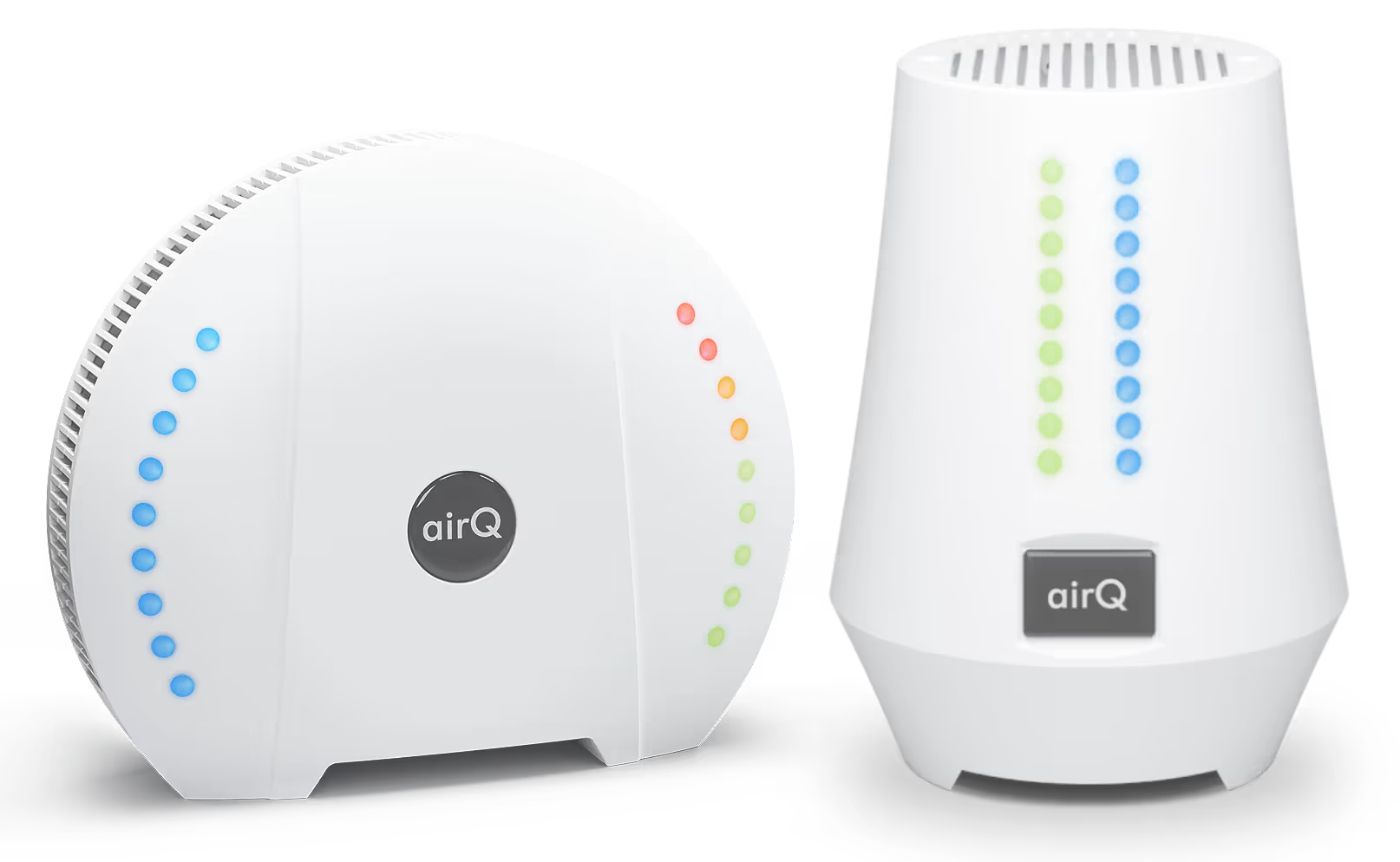
Mold Risk Calculator – When Does Mold Occur?
Mold can be harmful to health, as it releases spores that can sometimes be dangerous when inhaled. Mold also attacks building structures and furnishings, often resulting in costly renovations. That's why it's important to avoid mold as much as possible. With the air-Q Mold Risk Calculator, you can calculate the risk of one of the main causes of mold — condensation on interior walls (due to poorly insulated exterior walls).
Mold Risk Calculator
The Mold Risk Calculator determines the relative humidity reached at the interior wall of a house. If the relative humidity at the interior wall is too high (meaning the dew point is very close to the interior wall temperature), condensation can form and the wall becomes damp. A mold probability is then derived from this.
Determine the U-Value of Your House Wall
The U-value (thermal transmittance) of your house wall can be found in your property's building documents. For rented apartments, you can ask your landlord for the U-value. The lower the U-value, the better the thermal insulation.
Example U-values: single-glazed windows: 5.9 · concrete wall (25 cm): 3.3 · brick masonry (24–36 cm): 1.5–0.8 · passive-house-standard windows: 0.8 · low-e glazed windows: 1.3 · solid wood exterior wall: 0.5 · aerated concrete exterior wall: 0.23.
The interior thermal resistance is assumed to be 0.13 m²K/W. If, for example, furniture is placed directly in front of the wall in question, the thermal resistance can increase significantly, which leads to an increased risk of mold.
We continue to improve the air-Q Mold Risk Calculator and welcome your feature requests and suggestions.
Mold-Free Index in the air-Q
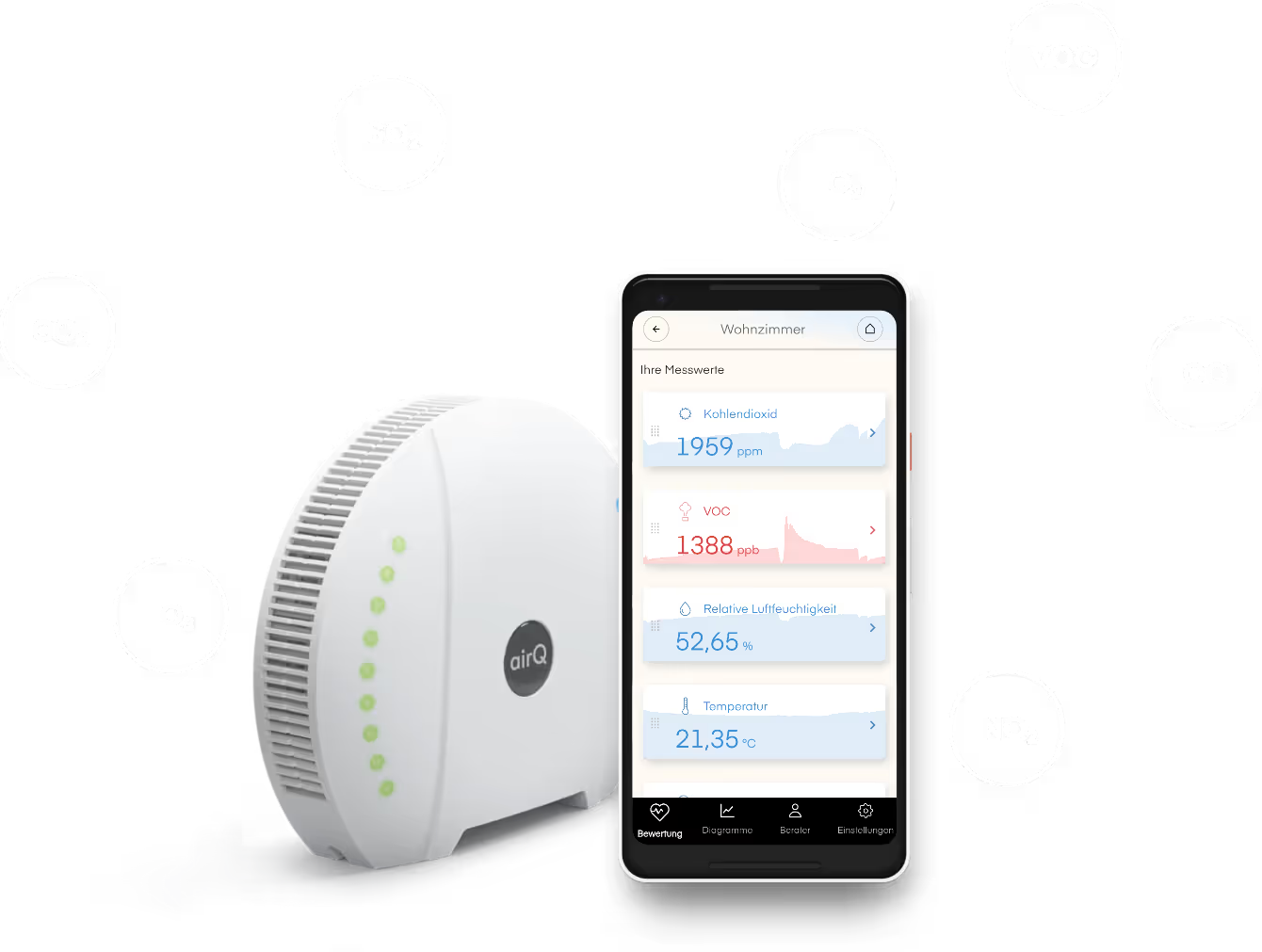
Keep an eye on mold risk with the air-Q and the Mold-Free Index. Measure indoor climate and air pollutants with the air-Q.
The air-Q Mold-Free Index continuously calculates the current mold risk by incorporating the humidity and temperature values measured by the air-Q and deriving an index value from them. A high index means low risk of mold developing; a low index means an increased potential risk of mold.
Our air-Qs with Mold-Free Index
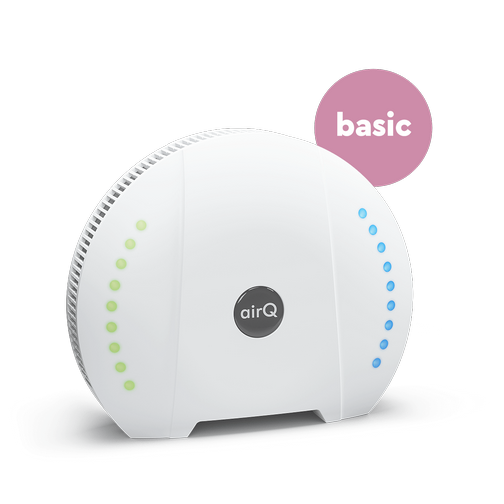
air-Q basic - The All-Rounder for Demanding Air Quality Measurement
- Carbon Dioxide
- Volatile Organic Compounds
- Relative Humidity
- Air Temperature
- Noise
- Particulate Matter
- Carbon Monoxide
- Air Pressure
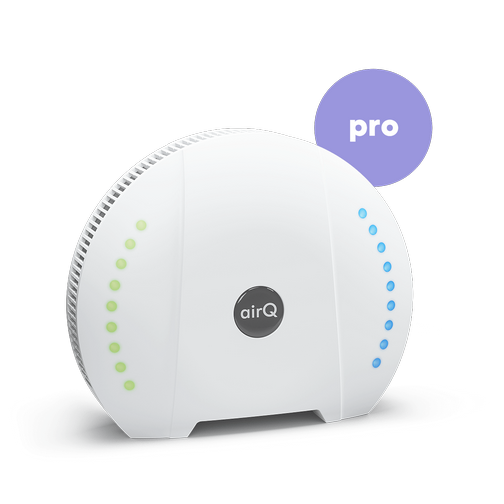
air-Q pro - The Professional for Ambitious Users
- Carbon Dioxide
- Volatile Organic Compounds
- Relative Humidity
- Air Temperature
- Noise
- Particulate Matter
- Carbon Monoxide
- Nitrogen Dioxide
- Air Pressure
- Formaldehyde
- Ozone

air-Q science - For Technology Enthusiasts and Scientists
- Carbon Dioxide
- Volatile Organic Compounds
- Relative Humidity
- Air Temperature
- Noise
- Particulate Matter
- Carbon Monoxide
- Nitrogen Dioxide
- Air Pressure
- Formaldehyde
- Oxygen
- Ozone
Optional sensors
from 839 €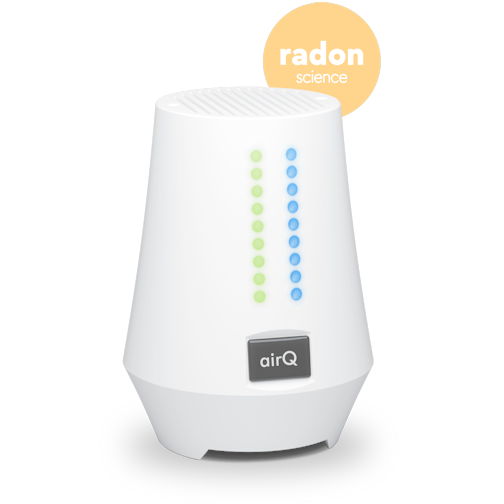
air-Q radon science - Detect the Radioactive Noble Gas Radon and Measure Air Quality
Optional sensors
from 499 €