
Can the HYLA Water Vacuum Purify the Air? The air-Q Lab Test
Fresh air is healthy and contains a perfect level of humidity. You should supply your lungs with good air not just outdoors, but indoors too. Especially in winter, room air is dry and rather poor quality. Air purifiers are meant to counteract this. In our air-Q Lab, we tested the HYLA EST water vacuum.
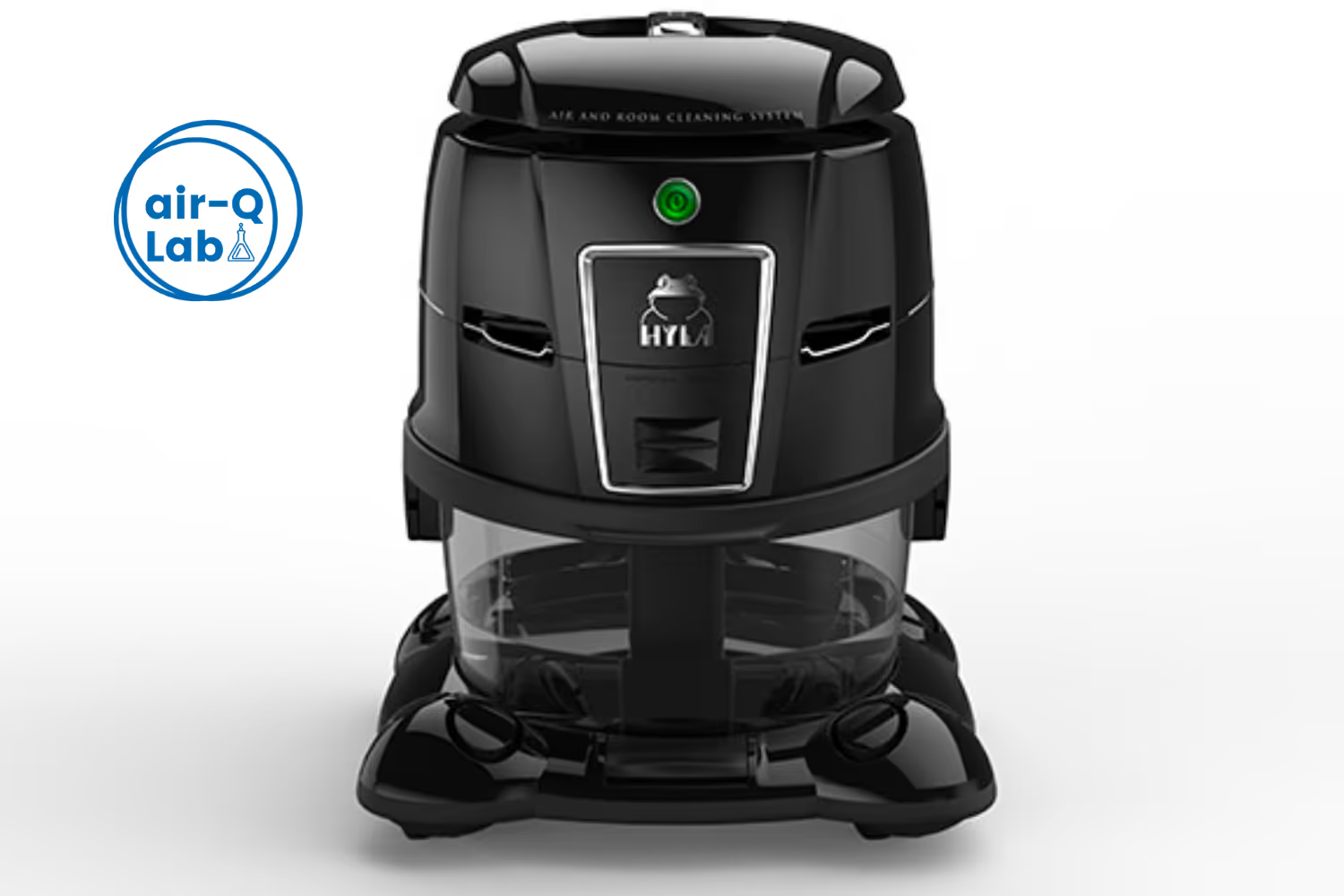
A water vacuum such as the HYLA binds dust and dirt not in a bag but in a water container and releases moisture into the room air while doing so. Whether it also cleans the air is what we checked in the air-Q Lab with an air monitor: particulate matter, VOC and humidity before, during and after use.
It's clear: refreshingly clear air is a valuable asset, since it boosts your well-being and raises your ability to concentrate. When heating runs at full blast, though, humidity and room air's oxygen share drop. Warm heating air dries out mucous membranes, making them crack. This can lead to infections like colds. HYLA's water vacuum combines air and room cleaning. As you vacuum, the device binds dirt and dust using water and releases more moisture back into the air. This lets you keep your home clean while raising humidity at the same time. Our hands-on test shows how, and whether, this works.
Stay well informed, for your healthy life
Subscribe to the air-Q newsletter
HYLA air purifier in the air-Q test
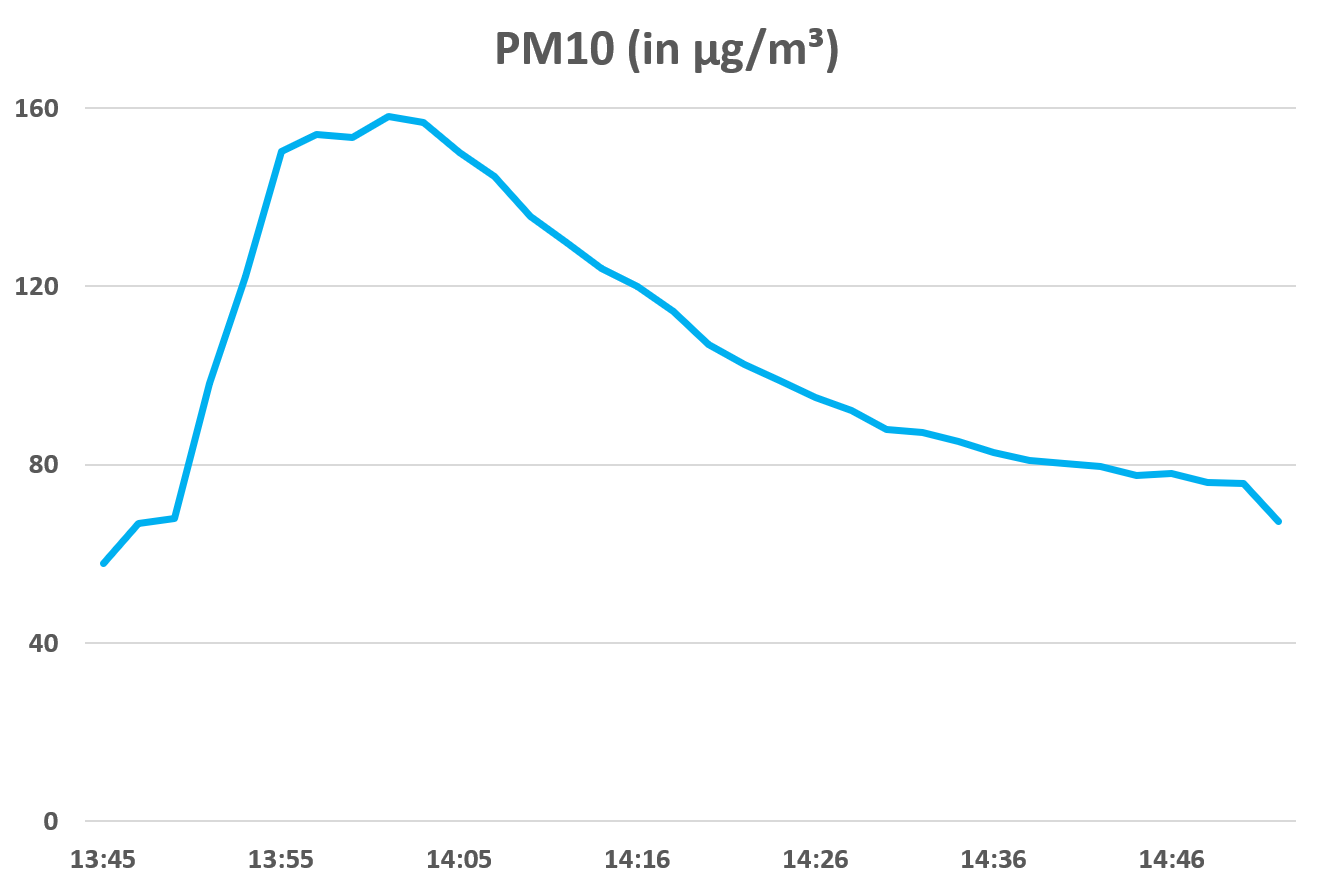
As with our test of the Venta AH902 K, this time too we artificially polluted the air in a 20 m² room with an incense cone. This caused PM₁₀ readings — meaning particles smaller than 10 µm — to rise noticeably. Particulate matter readings peaked already just under 20 minutes after lighting the cone. We checked the test with our air monitor air-Q pro, with a total of 14 different readings. At the start, the air analyzer showed extremely high particulate matter pollution, very high VOC readings, and low humidity. This time too, data was monitored live on a smartphone via the air-Q app during the test and then analyzed again with statistics software on a PC (chart).
Once the air-Q sounded the alarm via its red glowing LED lights, we started the HYLA water vacuum. The computer analysis showed that the HYLA EST both lowered particulate matter pollution and raised humidity. The water vacuum ran for about 40 minutes. This halved particulate matter pollution after about 15 minutes. After another 20 minutes, particulate matter pollution in room air returned to its original level.
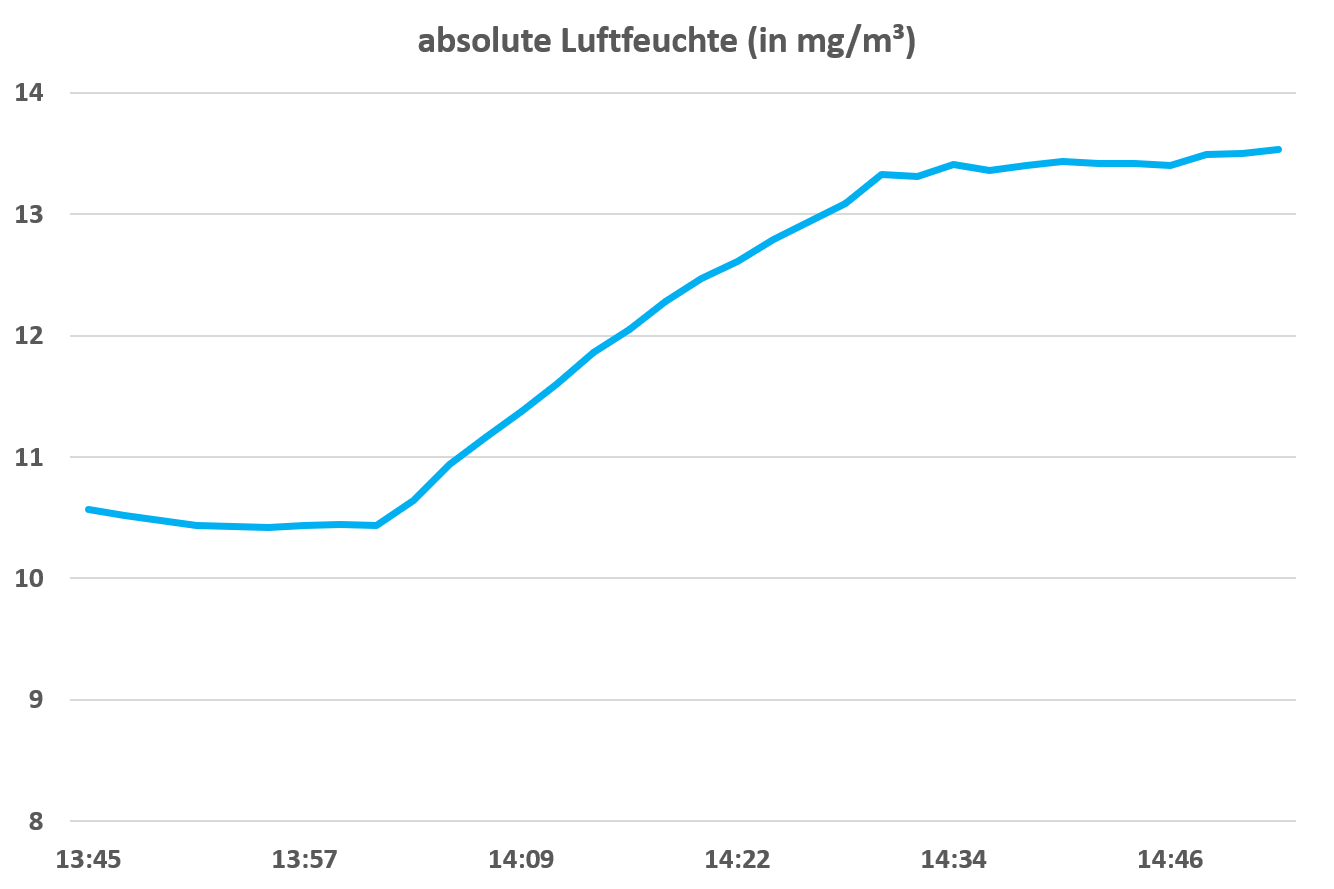
The vacuum's operation also raised absolute humidity, making room air significantly healthier to breathe. While starting values were around 10.5 mg/m³, the HYLA rapidly raised these to over 13 mg/m³ within the first half hour. Over the following 15 minutes, only a slight further rise to 13.5 mg/m³ was observed.
Result of our air-Q Lab
The HYLA air purifier too ensures that heavy air pollution drops by half within just 30 minutes. Unlike the previously tested Venta AH902 K, though, the HYLA EST also affects absolute humidity.
Read on
Summary and FAQ
Why can dry heating air be harmful to health?
What does the HYLA water vacuum do?
How was the air purifier checked in the hands-on test?
What change did the HYLA water vacuum produce?
Does the HYLA water vacuum clean the air?
HYLA tested: our verdict
Does a water vacuum replace an air purifier?
What are the criticisms of the HYLA?
More blog posts
Review: How Good Is Eoleaf's NeoPur 400 Air Purifier Really?
We tested Eoleaf's NeoPur 400 air purifier. Learn here how it cleaned pollutant-laden air and how air quality changed as a result.
Learn more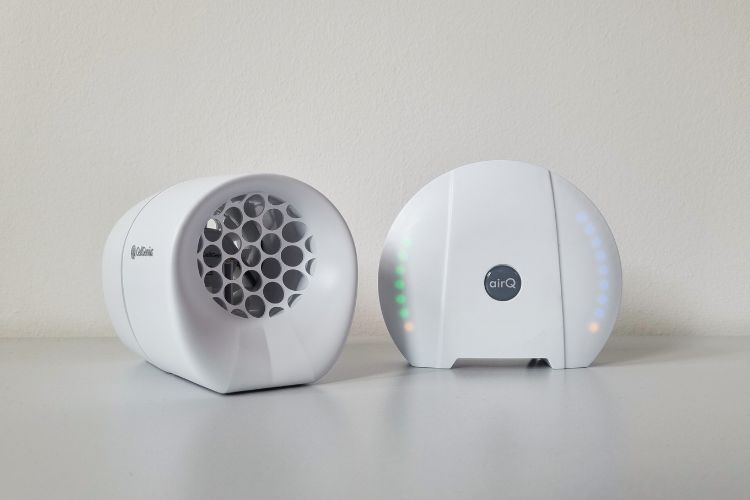
The CellActivator Air Purifier by CellGenius, Hands-On Tested
Air purifiers are an effective solution for improving indoor air quality. In this article, we test the CellActivator by CellGenius, which uses so-called Light-AirIon technology. We tested with the air-Q whether the device lives up to its own ambitious claims.
Learn more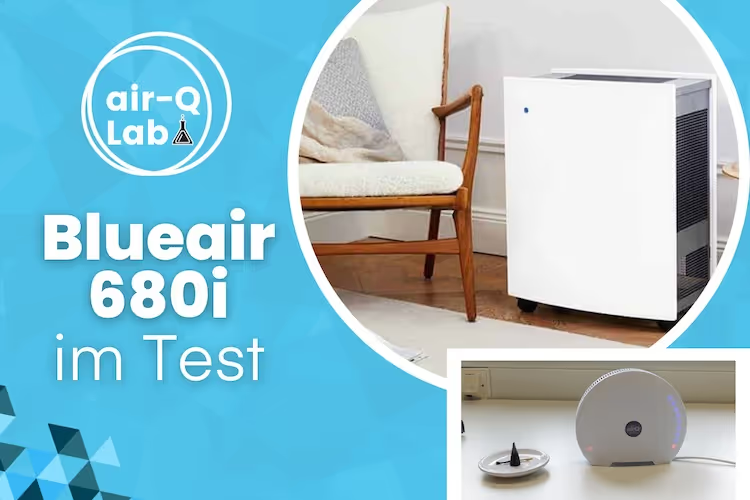
air-Q Lab: The Blueair Classic 680i Air Purifier Put to the Test
The Blueair Classic 680i air purifier promises clean indoor air – but how well does it really filter pollutants? Its effectiveness was tested in our experiment with an incense cone and deodorant. Find the results here.
Learn more