
Invisible Danger: How Cigarette Smoke Pollutes the Air
Cigarette smoke contains pollutants that remain indoors for hours – even after smoking. Especially a risk for children and non-smokers. Our blog shows how the air-Q air quality monitor makes this exposure visible – and how you can effectively protect yourself.
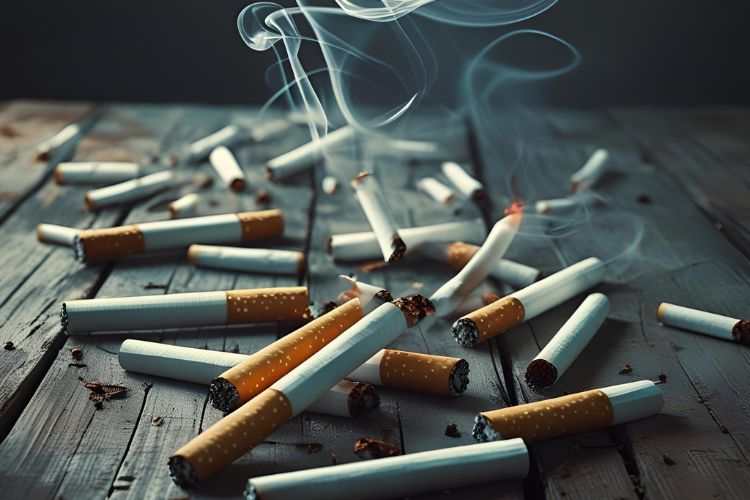
When smoking becomes an indoor hazard
The smell of cigarette smoke often dissipates quickly – but the harmful ingredients remain. What many don't know: even hours after smoking, fine particles, toxic gases, and carcinogenic substances are still measurable in indoor air. Secondhand smokers – i.e. everyone exposed to the smoke without smoking themselves – are especially affected. Modern air analyzers like the air-Q make these invisible dangers visible for the first time – helping you take targeted action.

What smoking releases – and what that means for indoor air
Burning a cigarette produces over 4,000 chemical substances, including a large number of toxic, irritating, and carcinogenic substances. Many of these quickly spread through indoor air – exposing everyone present.
The key pollutants at a glance:
Substance group | Examples | Health effect |
Particulate matter (PM) | PM₁₀, PM₂.₅, PM₁ | Penetrates deep into the lungs & bloodstream, triggers inflammation |
Carbon monoxide | Invisible, odorless | Blocks oxygen transport in the blood |
Nitrogen dioxide | NO₂ | Irritant gas, damages the airways |
VOCs | Benzene, nicotine, formaldehyde, acetone | Partly carcinogenic, irritating, neurotoxic |
PAHs & metals | Lead, cadmium, benzo[a]pyrene | Heavy metals, strongly carcinogenic |
Secondhand smoke & particulate matter: when the cigarette becomes an air polluter
A single cigarette can drastically drive up indoor particulate matter levels. PM₂.₅ concentrations of over 1,000 µg/m³ have been measured in smoke-filled rooms – that's more than 60 times the WHO limit value (15 µg/m³ as a daily average).
In a small apartment, a single cigarette can be enough to exceed a full day's particulate matter exposure on a busy main road.
In smoking bars or on terraces with several smokers, values between 200–600 µg/m³ are regularly reached – often over the course of hours.
The air-Q measures particulate matter in real time (PM₁, PM₂.₅, and PM₁₀), detecting polluted rooms or time windows – even where it's not obvious at first glance.
VOCs in cigarette smoke: when nicotine & co. travel through the air
Cigarette smoke contains more than 250 different VOCs (volatile organic compounds) – including substances of high health concern such as:
- Nicotine (~150–300 µg per cigarette)
- Formaldehyde
- Benzene
- Toluene
- Acetone
An average analysis result for tobacco smoke in micrograms per cigarette
Substance | Content (µg) | Substance | Content (µg) |
Carbon monoxide | < 10 000 | Magnesium (ionized) | 0.07 |
Nicotine | < 1 000 | Antimony (ionized) | 0.052 |
Acetaldehyde | 500 … 1 200 | Pyrene | 0.05 … 1.01 |
Hydrogen cyanide | 400 … 500 | Benzo[a]fluorene | 0.04 … 0.18 |
Hydroquinone | 110 … 300 | Iron (ionized) | 0.042 |
Acetic acid | 100 … 1 000 | o-Toluidine | 0.03 … 0.16 |
Nitrogen oxides | 100 … 600 | Anthracene | 0.02 … 0.23 |
Catechol | 100 … 360 | Benzo[b]fluorene | 0.02 |
Acetone | 100 … 250 | Fluoranthene | 0.01 … 0.27 |
Methanol | 90 … 180 | Hydrazine | 0.03 … 0.04 |
Formic acid | 80 … 600 | Urethane | 0.02 … 0.04 |
Formaldehyde | 70 … 100 | Lead (ionized) | 0.017 … 0.98 |
Potassium (ionized) | 70 | Arsenic | 0.012 … 0.022 |
Phenol | 60–140 | Dibenzo[a,j]anthracene | 0.01 … 0.03 |
Ammonia | 50 … 130 | 1-Nitrosopyrrolidine | 0.006 … 0.11 |
3- and 4-Cresol | 40 … 80 | Benzo[a]pyrene | 0.005 … 0.078 |
3-Methylpyridine | 20 … 36 | Dibenzo[a,h]anthracene | 0.004 |
Pyridine | 16 … 40 | Mercury | 0.004 |
Nitrosamines (total) | ≤ 8.5 | Benzo[a]anthracene | 0.004 … 0.076 |
N'-Nitrosonornicotine | ≤ 3.7 | 1-Methylchrysene | 0.003 |
Sodium (ionized) | 1.3 | Benzo[ghi]perylene | 0.003 … 0.039 |
Carbazole | 1.0 | Anthanthrene | 0.002 … 0.022 |
Aluminum (ionized) | 0.22 | 4-Aminobiphenyl | 0.002 … 0.005 |
N'-Nitrosoanatabine | 0.2 … 4.6 | Vinyl chloride | 0.001 … 0.01 |
2-Nitropropane | 0.2 … 2.2 | N-Nitrosodiethylamine | 0.001 … 0.02 |
Copper (ionized) | 0.19 | Silver | 0.0012 |
Zinc (ionized) | 0.12 … 1.21 | Gold | 0.00002 |
Phenanthrene | 0.08 … 0.62 | Chromium | 0.004 |
Source: Tobacco smoke – Wikipedia
Many of these substances vaporize as the cigarette smolders and accumulate in indoor air – even with a window open.
The air-Q measures VOCs as a TVOC value (Total Volatile Organic Compounds), enabling a qualitative and quantitative analysis of pollutant exposure from cigarette smoke.
CO & NO₂: invisible gases, major danger
Two especially dangerous gases in cigarette smoke are:
- Carbon monoxide (CO): Colorless and odorless, but extremely dangerous. Already critical starting at 10 ppm – often measurable at 30–50 ppm in smoke-filled rooms.
- Nitrogen dioxide (NO₂): An irritant gas that attacks mucous membranes and the lungs. Peak values while smoking: over 200 µg/m³, although 40 µg/m³ is already considered harmful to health.
With the air-Q pro, both gases can be precisely captured in real time – for clear insight where health hazards otherwise go undetected.
Symptoms of secondhand smoke exposure: noticeable and silent risks
It's not just the air that gets worse – the body suffers too. The symptoms and risks of secondhand smoke exposure are varied:
Time frame | Possible effects |
Short-term | Irritation of eyes, nose & throat, coughing, headaches |
Medium-term | Worsening of asthma, bronchitis, more frequent infections |
Long-term | Increased risk of lung cancer, cardiovascular disease, strokes, childhood asthma |
Protective measures: what really helps against secondhand smoke
Here's how you can effectively reduce exposure:
- Smoking ban indoors – even with the window tilted open
- Use outdoor areas for smoking
- Intensive cross-ventilation instead of a permanently tilted window
- Air purifiers with activated carbon filters – helpful against some VOCs, but not against all substances
- Air quality measurement with the air-Q – for an objective assessment and targeted decisions
The air-Q makes secondhand smoke visible
With the air-Q, you can measure air quality where it matters – whether in the nursery, living room, office, or car. Especially helpful: real-time data on:
- TVOC (total VOC)
- PM₁ / PM₂.₅ / PM₁₀ (particulate matter)
- Carbon monoxide (CO)
- Nitrogen dioxide (NO₂)
This lets you immediately detect exposure spikes from smoking – and take targeted measures.
Making what makes you sick visible
Cigarette smoke isn't just an odor problem – it's a serious health risk. Even for non-smokers. With an air quality monitor like the air-Q, you can make invisible pollutants visible – and make informed decisions for a healthier indoor climate. For more clarity, more protection, and, in the long run, more health.
Summary and FAQ
What exactly is secondhand smoke exposure?
How dangerous is secondhand smoke exposure really?
Is ventilating enough to remove cigarette smoke?
How can I effectively protect myself and my family?
More blog posts
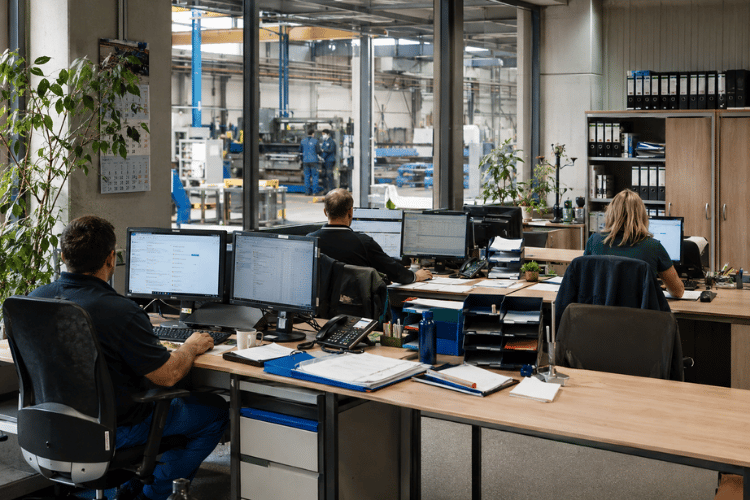
Measuring dust exposure in the workplace: continuous monitoring with air-Q
The air-Q continuously records PM1, PM2.5 and PM10 and makes dust peaks and recurring exposure patterns in the workplace visible.
Learn more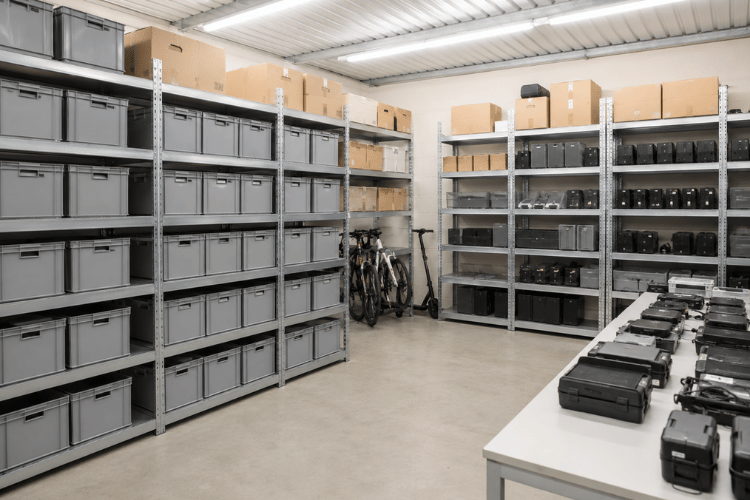
Hydrogen Fluoride: Invisible Danger in Battery Fires and Technical Facilities
Hydrogen fluoride (HF) is a highly dangerous gas that can arise, among other things, from defects or fires in lithium-ion batteries. Learn what health risks exist, what limit values apply, and why continuous monitoring with an HF sensor is important for battery storage, BESS facilities, and industrial applications.
Learn more
These Air Values Are Especially Important in Summer
In summer, not just high temperatures affect the indoor climate. CO₂, humidity, temperature, ozone, particulate matter, and VOC also affect the indoor climate — and why regular measurement makes sense for health, well-being, and performance.
Learn more